
Sustainable Cement: DIOPMA’s Research to Reduce the Carbon Footprint of the Cement Industry
The cement industry faces one of the greatest challenges in the transition towards a decarbonised economy. Although cement is the foundation of much of today’s infrastructure, its production accounts for a significant share of global carbon dioxide (CO₂) emissions, making the development of more sustainable alternatives a scientific and industrial priority.
In this context, DIOPMA (Design and optimization of processes and materials) from the Department of Materials Science and Fisical Chemistry at the Universitat de Barcelona, is developing innovative strategies to produce sustainable cement that preserves the technical performance of conventional cement while significantly reducing its environmental impact.
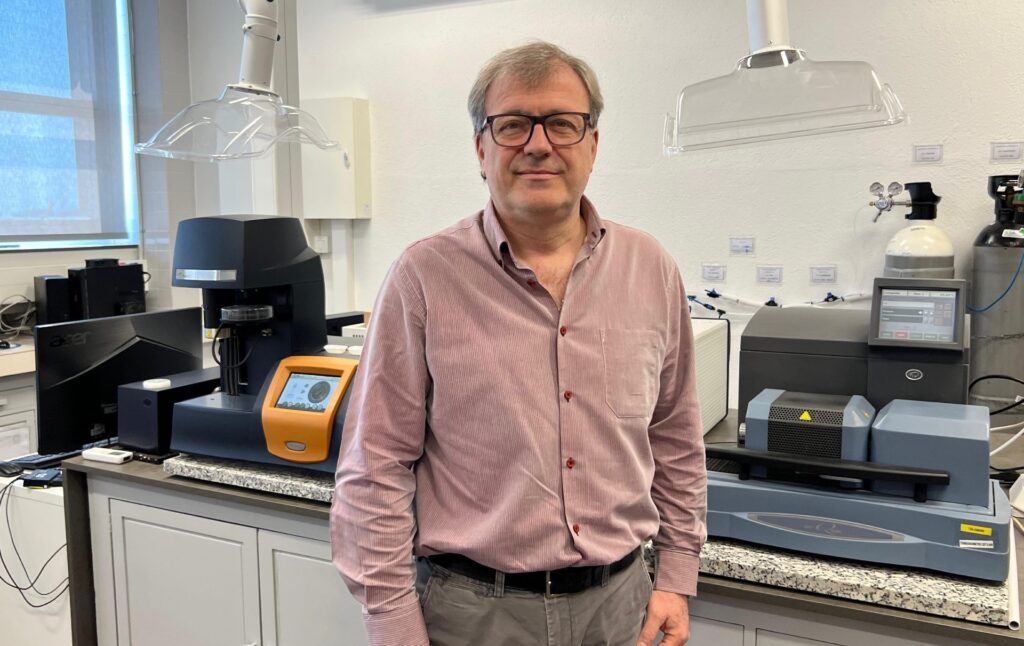
This research is led by Dr Josep Maria Chimenos, Full Professor at the University of Barcelona and researcher at DIOPMA, who recently discussed the project’s latest developments in an interview published by the Fundació Bosch i Gimpera (FBG), the University of Barcelona’s knowledge transfer and innovation office.
Key Takeaways
- Cement manufacturing is one of the largest industrial sources of CO₂ emissions.
- DIOPMA is developing innovative processes to produce sustainable cement with a significantly lower carbon footprint.
- The research focuses on replacing high-temperature thermal treatments with mechanical activation processes.
- The project promotes the valorisation of secondary resources and industrial by-products as alternative raw materials.
- The initiative is supported by the Proof of Concept (PdC) programme of the Innovation Promotion Fund (F2I), managed by the Fundació Bosch i Gimpera.
Why Is Sustainable Cement Necessary?
Conventional Portland cement production requires heating mineral raw materials to temperatures close to 1,450 °C, an energy-intensive process responsible for substantial greenhouse gas emissions.
These emissions originate not only from the fuels required to achieve such high temperatures but also from the decarbonation of limestone during clinker production.
For this reason, reducing the environmental impact of cement has become one of the major challenges in materials science. Developing new formulations, incorporating alternative raw materials and designing more energy-efficient manufacturing processes are strategic priorities for achieving the global decarbonisation goals of the construction industry.
Within this context, DIOPMA conducts research aimed at developing scientifically robust solutions that can also be effectively transferred to industry.
DIOPMA’s Approach: Less heat, more innovation
One of the project’s most promising innovations is the replacement of part of the traditional thermal activation process with mechanical activation technologies.
As Dr Josep Maria Chimenos explains in the interview published by the Fundació Bosch i Gimpera, the objective is to enable specific clay-based materials to develop cementitious properties through mechanical processing, reducing the need for high-temperature treatments.
This approach offers a significant opportunity to decrease the energy consumption associated with cement production while simultaneously lowering its carbon emissions.
The research also investigates the use of secondary raw materials and underutilised industrial by-products, promoting a circular economy model that gives valuable mineral resources a second life instead of treating them as waste.
By combining resource valorisation with reduced energy consumption, this strategy represents one of the most innovative approaches currently being explored in the development of next-generation sustainable cements.
From the Laboratory to Industry
One of the project’s defining characteristics is its strong focus on technology transfer.
The objective is not only to demonstrate the scientific feasibility of the proposed process but also to facilitate its future industrial implementation.
Its potential applications extend across several industrial sectors:
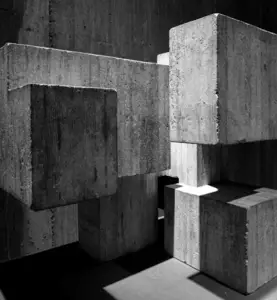
Cement industry
The incorporation of new activation processes could reduce energy consumption during cement manufacturing while significantly lowering the carbon footprint of the final product.
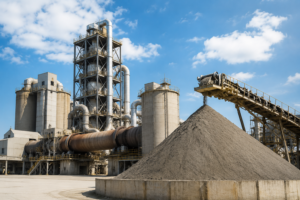
Mining and quarrying companies
The utilisation of clay-based materials and secondary mineral resources creates new opportunities to valorise materials that currently have limited commercial value.
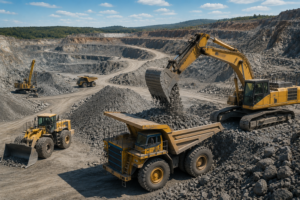
Machinery manufacturers
Optimising grinding systems and mechanical activation technologies could generate new innovation opportunities for manufacturers of industrial processing equipment.
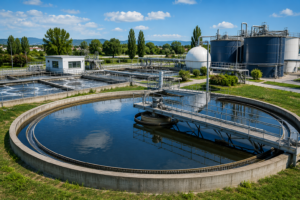
Water treatment plants and other mineral waste management facilities
The project also investigates the use of specific mineral by-products, supporting circular economy strategies while reducing industrial waste generation.
This multidisciplinary approach reflects a growing trend in materials science research: developing scalable technologies that can be successfully transferred from research laboratories to industrial production.
Applied research to cccelerate decarbonisation
The transition towards a low-carbon industry requires solutions that can be implemented in the short and medium term without compromising the technical performance of construction materials.
For this reason, DIOPMA’s research focuses not only on the scientific characterisation of new materials but also on the industrial feasibility of the proposed manufacturing processes.
Reducing energy consumption, valorising secondary raw materials and optimising production methods represent three fundamental pillars in the development of more sustainable cement technologies.
Projects such as this highlight the essential role that universities and research centres play in creating innovative technologies capable of improving industrial competitiveness while contributing to environmental sustainability.
Conclusions
The development of sustainable cement is one of the major challenges currently facing materials engineering.
The research led by Dr Josep Maria Chimenos at DIOPMA presents an innovative approach based on the mechanical activation of mineral materials and the valorisation of secondary resources to reduce the carbon footprint associated with cement production.
Beyond its scientific contribution, the project demonstrates how collaboration between universities, research centres and technology transfer programmes can accelerate the transformation of research outcomes into practical industrial solutions.
Through initiatives such as this, DIOPMA continues to strengthen its commitment to applied research, industrial innovation and the development of advanced materials that contribute to a more sustainable and environmentally responsible construction sector.
Acknowledgements to the Fundació Bosch i Gimpera
This article is based on the interview conducted by the Fundació Bosch i Gimpera (FBG) with Dr Josep Maria Chimenos, published as part of the Foundation’s series highlighting innovation and knowledge transfer projects developed at the University of Barcelona.
The research project has received support through the Proof of Concept (PdC) programme of the Innovation Promotion Fund (F2I), an initiative promoted by the Fundació Bosch i Gimpera to foster the transfer of research results to society and industry.
Scientific team behind the study
Dr Josep Maria Chimenos is a Full Professor at the University of Barcelona and a researcher at DIOPMA.
His research focuses on the valorisation of materials, sustainable management of mineral resources, circular economy strategies and the development of innovative cementitious materials with a reduced environmental impact.
At DIOPMA, he leads several research lines aimed at reducing the carbon footprint of industrial processes through advanced materials science and innovative technological solutions.