
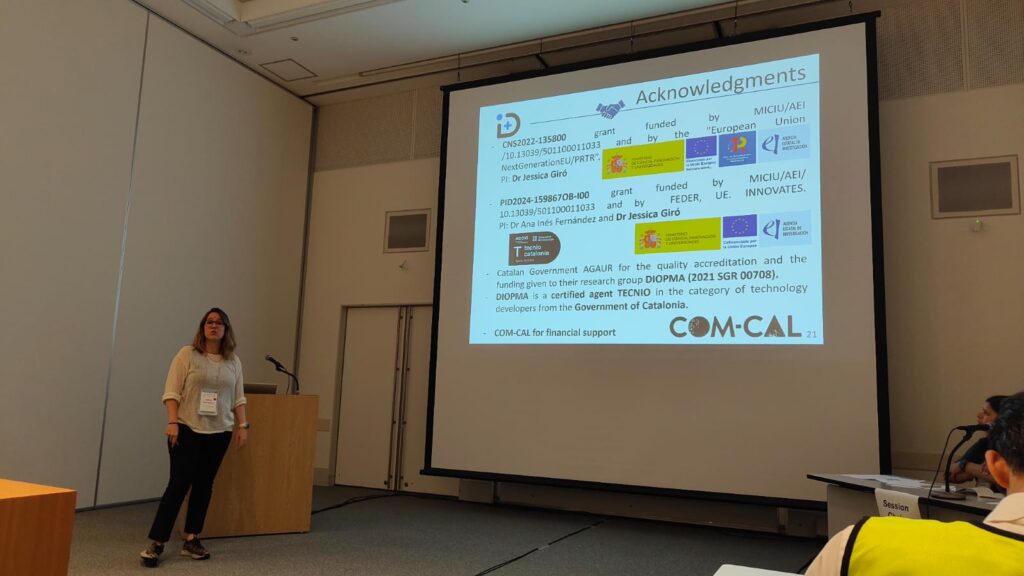
DIOPMA Showcases Its latest research on sustainable construction materials at WASCON 2026
Research on sustainable construction materials plays a key role in the transition towards a more efficient, circular and environmentally responsible industrial model. Waste valorisation, the development of new cementitious materials and innovative solutions to reduce the carbon footprint are among the main research areas transforming the construction sector.
In this context, researchers from DIOPMA (Design and optimization of processes and materials) of the Materials Science and Fisical Chemistry department at the Universitat de Barcelona, actively participated in WASCON 2026, one of the leading international conferences on sustainable construction materials, circular economy and waste valorisation, held in Japan in May.
The conference provided an excellent opportunity for the DIOPMA team to present its latest scientific advances, strengthen international collaborations and reinforce the group’s position as a leading research centre in the development of construction materials with a lower environmental impact.
Key highlights from DIOPMA at WASCON 2026
- Participation of DIOPMA researchers at the international WASCON 2026 conference.
- Presentation of four oral communications and five scientific posters.
- Research focused on sustainable cement, circular economy and waste valorisation.
- Appointment of Dr Jessica Giró-Paloma as a new member of the ISCOWA Board.
- Establishment of new international collaborations in the field of sustainable construction materials.
WASCON 2026: A meeting point for international research
WASCON (Waste Management and Circular Economy in Construction) regularly brings together researchers, universities, technology centres and companies from around the world to share the latest advances in sustainable construction.
The conference addresses research topics such as:
- Sustainable construction materials
- Circular economy
- Industrial waste valorisation
- Novel cementitious materials
- Life Cycle Assessment (LCA)
- Decarbonisation of the construction sector
Participating in this international forum enables researchers to exchange scientific knowledge, establish new collaborations and accelerate the transfer of innovative technologies to industry.
DIOPMA Researchers present their latest scientific advances
During the conference, several members of the research group presented studies that reflect the diversity of DIOPMA’s research activities.
Oral Presentations
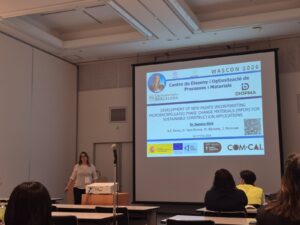
Jessica Giró-Paloma
Development of New Paints Incorporating Microencapsulated Phase Change Materials (MPCM) for Sustainable Construction Applications.
This research explores the development of innovative paints incorporating microencapsulated phase change materials to improve the energy efficiency of buildings.
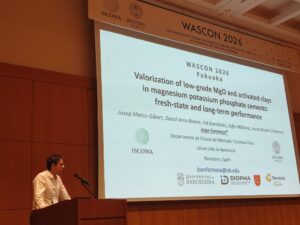
Joan Formosa
Valorization of Low-grade MgO and Activated Clays in Magnesium Potassium Phosphate Cements: Fresh-state and Long-term Performance.
This study analyses the potential of low-grade magnesium oxide and activated clays as components of alternative cement formulations with reduced environmental impacts.
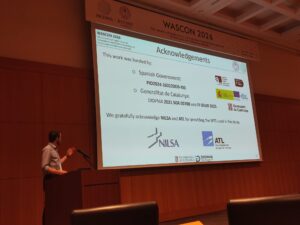
Jofre Mañosa
Valorization of Mechanically Activated Water Treatment Sludge as a Sustainable Cement Replacement.
This research proposes new strategies to valorise water treatment sludge through mechanical activation and its use as a partial replacement for conventional cement.
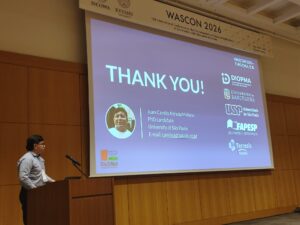
Camilo Molano-Adrada
Influence of Low-grade MgO By-product on the Formation and Properties of Basic Magnesium Sulfate Cement.
This work investigates the behaviour of magnesium sulfate cements produced using industrial by-products as raw materials.
Scientific poster presentations
In addition to the oral presentations, DIOPMA presented five scientific posters.
The studies focused on topics including:
- Thermal energy storage using microencapsulated materials.
- Magnesium phosphate cements.
- Valorisation of bottom ash from waste-to-energy plants.
- Novel alkali-activated binders.
- Life Cycle Assessment of reactive cements produced from industrial by-products.
These projects demonstrate how materials science can simultaneously improve the performance of construction materials while reducing the environmental impact associated with their production.
Dr. Jessica Giró-Paloma Joins the ISCOWA Board
One of the most significant milestones of DIOPMA’s participation at WASCON 2026 was the appointment of Dr Jessica Giró-Paloma as a new member of the Board of ISCOWA (International Scientific Committee on Waste Management and Circular Economy in Construction).
This appointment represents international recognition of her scientific career and further strengthens DIOPMA’s presence within one of the world’s leading organisations dedicated to circular economy research in the construction sector.
Her new role will contribute to defining future strategic research directions and fostering scientific collaboration between international research groups.
Research with impact for a more sustainable construction industry
The research presented during WASCON 2026 shares a common objective: developing materials capable of reducing natural resource consumption while lowering greenhouse gas emissions associated with the construction industry.
Key research areas include:
- Industrial waste valorisation.
- Reuse of mineral by-products.
- Low-carbon cements.
- Thermal energy storage materials.
- Environmental assessment using Life Cycle Assessment methodologies.
These projects reflect DIOPMA’s commitment to research that combines scientific excellence with effective knowledge transfer to industry and public institutions.
Conclusions from DIOPMA’s participation at WASCON 2026
DIOPMA’s participation in WASCON 2026 highlights the group’s growing international role in the development of sustainable construction materials and innovative solutions for the circular economy.
The scientific contributions presented, together with the international recognition received by Dr Jessica Giró-Paloma, further strengthen DIOPMA’s international profile and demonstrate the impact of its research in areas such as waste valorisation, innovative cementitious materials and the decarbonisation of the construction sector.
Organisations supporting this research
The scientific presentations were supported by several competitive research projects funded by national and international organisations, including the Spanish Ministry of Science, Innovation and Universities (MICIU), the Spanish State Research Agency (AEI), FEDER, the European Union – NextGenerationEU/PRTR.
We also acknowledge the Government of Catalonia and AGAUR for the TECNIO accreditation awarded to DIOPMA (2021 SGR 00708), as well as our industrial partners for their valuable support.
Scientific team behind the research
The studies presented at WASCON 2026 were carried out by researchers from DIOPMA’s Construction Materials Research Group:
- Jessica Giró-Paloma
- Joan Formosa
- Jofre Mañosa
- Camilo Molano-Adrada
- Josep M. Chimenos
- Mercè Segarra
Their research focuses on the development of sustainable construction materials, alternative cements, industrial waste valorisation, thermal energy storage, circular economy strategies and technology transfer.