LIFE HERMES: Harmonized Efforts for Reducing Mercury Emissions Safely
Project: 101216077
LIFE-2024-SAP-ENV-ES-LIFE-HERMES
Co-funded by the European Union
Mercury (Hg) is a metal that has been extracted and used by humans for thousands of years. However, in recent decades, the full extent of its risks to health and the environment has been understood, leading to it being subject to international, European, and national regulations. The LIFE HERMES project aims to demonstrate an innovative solution with great potential for recovering soils contaminated with mercury.
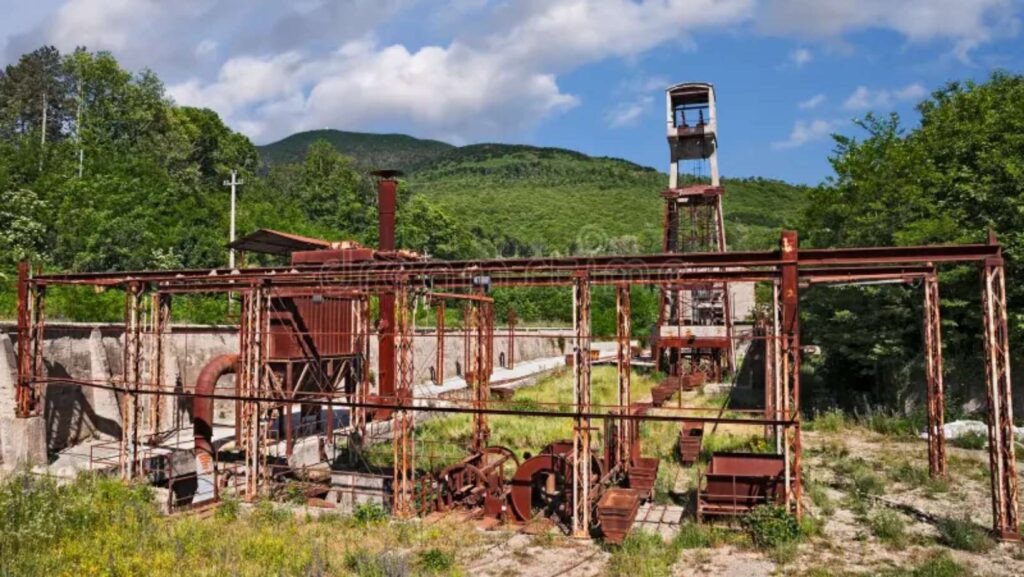
To this end, two particularly significant sites have been selected. The first is Cerco de Almadenejos (CDA) in Spain, the largest mercury mine in the world. The second is the Abbadia San Salvatore mine (ABSS) in Italy, one of the most important sites worldwide for the production of liquid mercury. Mercury is the only liquid heavy metal at room temperature.
A Solution that Preserves the Environment
LIFE HERMES offers a solution based on the in-situ chemical stabilization of Hg, which provides significant advantages over traditional decontamination methods since it is minimally invasive, preserving the integrity of the site and reducing disturbance to the surrounding environment, unlike ex-situ methods.
This approach is also more cost-effective, eliminating the need for the transport and storage of contaminated materials. By stabilizing the mercury on-site, the risk of contaminant dispersion during excavation or transport is minimized, ensuring a safer remediation process. Additionally, it provides long-term stability by converting Hg into a less mobile form, reducing the risk of leaching and environmental impact. The flexibility of the LIFE HERMES solution allows it to adapt to specific site conditions and contamination levels, offering a customized approach.
LIFE HERMES will demonstrate this solution at the Cerco de Almadenejos (27,000 m²) and Abbadia San Salvatore (1,000 m²) sites and will establish a new procedure for the remediation of Hg-contaminated soils. Furthermore, the project will revegetate the area and explore new uses for the space, involving the local population while restoring the historical value of both sites. The results will be replicated at two additional sites in Spain and Slovenia.
Duration: 01/09/2025 – 31/08/2029 / Budget: 2.836.287,52 euros
Partners of Life Hermes
The LIFE HERMES project is coordinated by MAYASA (Minas de Almadén y Arrayanes, SA) (Spain) and involves an international consortium comprising Terresis (Centro de Magnesitas Navarras) (Spain), Unione dei Comuni Amiata Val d’Orcia (Italy), the University of Castilla-La Mancha (Spain), and the University of Barcelona (Spain).
Expected results
The LIFE HERMES project aims to validate the use of Hidramag® as an affordable, safe, and effective solution for the decontamination of mercury-contaminated soils.
It is expected that in historically exploited areas, this will contribute to improving the well-being of local communities and protecting cultural heritage.
In more detail, the expected results include:
- Technical and Economic Assessment: Protocols will be established to assess the technical and economic feasibility of Hidramag® in the decontamination of mercury-contaminated soils.
- Pollution Reduction: A reduction of mercury leaching in contaminated soils by over 90% is expected, even in areas of high concentration. Additionally, efforts will be made to reduce mercury emissions to water by 50% and air dispersion by 80%, improving environmental quality.
Environmental and Biodiversity Protection: The safety of aquatic environments will be ensured, minimizing the contamination of river species and preserving water resources and air quality.
- Preservation of Cultural and Social Heritage: In Almadenejos, Spain, cultural assets of declared interest will be preserved, while improving the social perception of the sites involved, promoting tourism and the revaluation of these places.
- Promotion of the Circular Economy: In collaboration with MAGNA, industrial waste will be used to produce Hidramag®, contributing to the circular economy.
- Expansion of Application and Replicability: This technology is aimed to be applied to different types of soils and contaminants, expanding its use to other European facilities and mines, such as Solvay in Spain and the former mercury mine in Idrija, Slovenia, multiplying its impact.
- Business Plan for Hidramag®: A plan will be developed for the commercialization of Hidramag®, boosting its adoption at a commercial level.
Pilot Actions
Cerco de Almadenejos (CDA): A Pilot for the Remediation of Mercury-Contaminated Soils
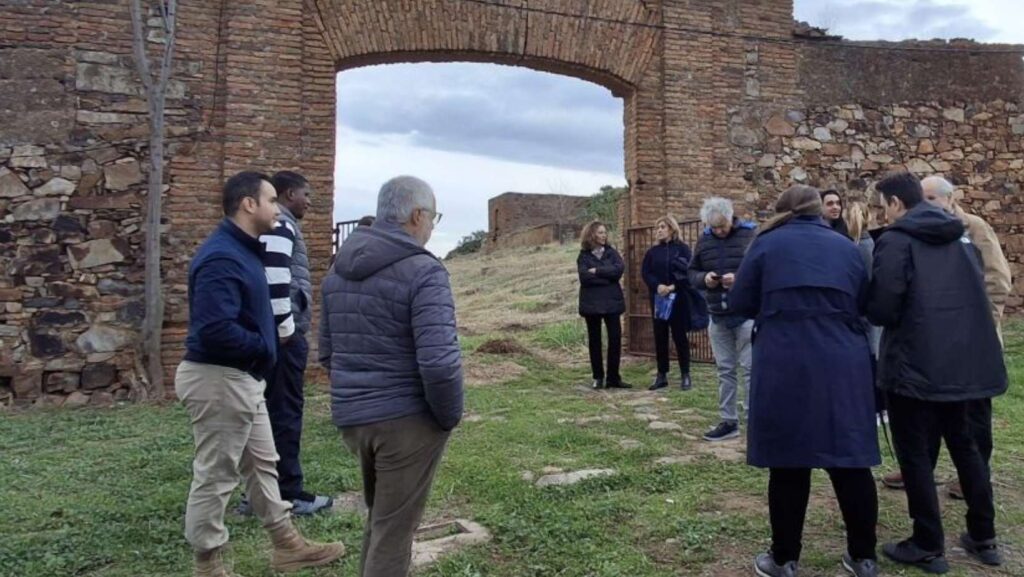
The Cerco de Almadenejos (CDA), located in the small municipality of Almadenejos in the Ciudad Real region, is part of the Almadén mining district, known for being the largest mercury mine in the world. This historic area, with a population of around 200 inhabitants, houses an ancient metallurgical plant from the 18th century, which was used for mercury extraction. From 1794 to 1861, the CDA was a key center for cinnabar roasting, both from Almadén and Almadenejos, and is now declared a Bien de Interés Cultural (BIC), making it a valuable historical heritage site.
The site presents varying levels of mercury contamination in the soil, ranging from 40 mgHg/kg to up to 15,900 mgHg/kg, significantly exceeding the average contamination levels in Europe. This contamination generates a continuous source of mercury emissions in gas form, which disperse into the atmosphere through dust particles that can be carried by the wind to varying distances. Additionally, the area is also prone to generating contaminated water, which may occasionally reach public streams, further contributing to water contamination, especially affecting aquatic biota.
The challenge of addressing this issue is complicated by the historical and cultural value of the site, preventing drastic measures such as the demolition of the furnace ruins and the complete restoration of the soil. Due to its protected status, it is necessary to develop an innovative, cost-effective, and less invasive solution that improves the environment without compromising the conservation of cultural heritage.
To this end, the LIFE HERMES project is implementing a treatment for mercury-contaminated soils at the CDA, an innovative solution that adapts to the specific characteristics of this site. With a total area of 33,306 m², the treatment will focus on the first 50 cm of soil, where the highest mercury concentrations have been detected.
The soil at CDA is of a «loam» texture, with a high sand content and effective porosity, which promotes the circulation of air and water, ideal conditions for applying the selected remediation technologies. Preliminary studies conducted at the site confirm that the chosen technology is suitable for treating mercury contamination in these soils, allowing for a significant reduction in mercury levels and minimizing risks to the environment and public health.
In summary, the CDA represents a key pilot case for demonstrating how mercury contamination at sites of high cultural value can be addressed while maintaining a balance between heritage preservation and improving the natural environment. This project has the potential to offer replicable solutions for other sites affected by historical mining in Europe, contributing to environmental rehabilitation and the well-being of local communities.
Abbadia San Salvatore: From Mercury Red to Green Vegetation
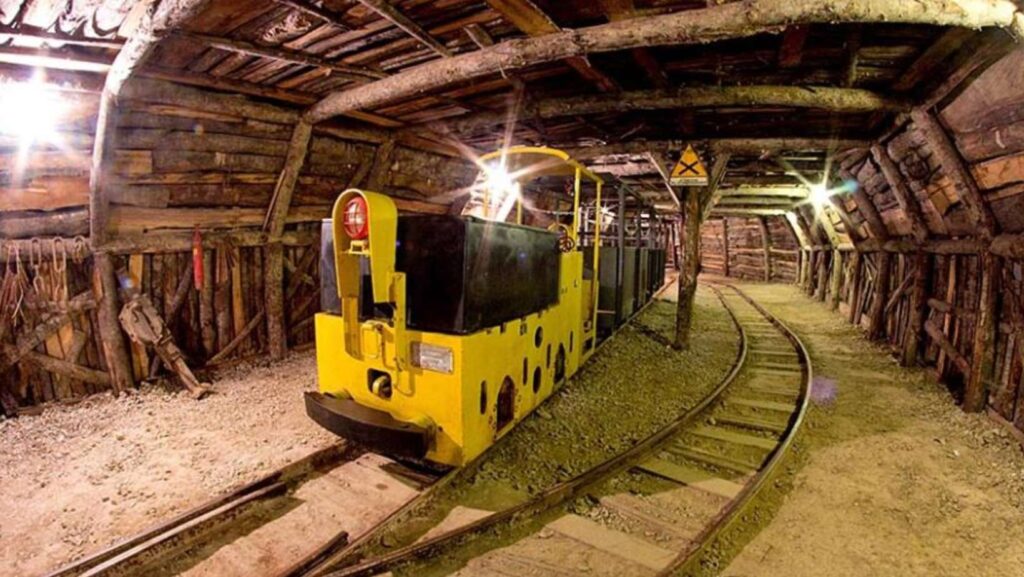
The Abbadia San Salvatore mine (ABSS), active between 1899 and 1972, was one of the most important in the Monte Amiata mining district, in the province of Siena, Italy. Located to the west of the municipality of Abbadia San Salvatore, it was crucial for global mercury production.
Throughout its history, this mine produced more than 100,000 tons of liquid mercury, approximately 10% of which dispersed into the environment, causing significant ecological impact.
In 2008, the property of the mining concession passed to the municipality of Abbadia San Salvatore (UCAVO), which took on the responsibility of the environmental rehabilitation of the mining area. The goal is to transform these areas into rehabilitated spaces, preserving their heritage and designating them for museum and public uses, such as green areas.
Previous investigations in the area have revealed high levels of mercury (Hg), arsenic (As), and antimony (Sb) in the soil and leachates, with particularly high concentrations of arsenic due to the interaction of groundwater with volcanic materials present on-site. These contaminants, particularly arsenic, have dispersed through soil leachates and groundwater, contributing to environmental contamination.
In fact, the area where remediation work will take place is located about 300 meters from a water well known as Trivella, which extracts water from the old mining galleries. This well has become a key point for monitoring groundwater quality in the area.
LIFE HERMES aims not only at the environmental remediation of the site, its restoration for public use, and preservation of its historical heritage but also at improving the social perception of the area, thereby boosting its tourism value through tools such as environmental education.